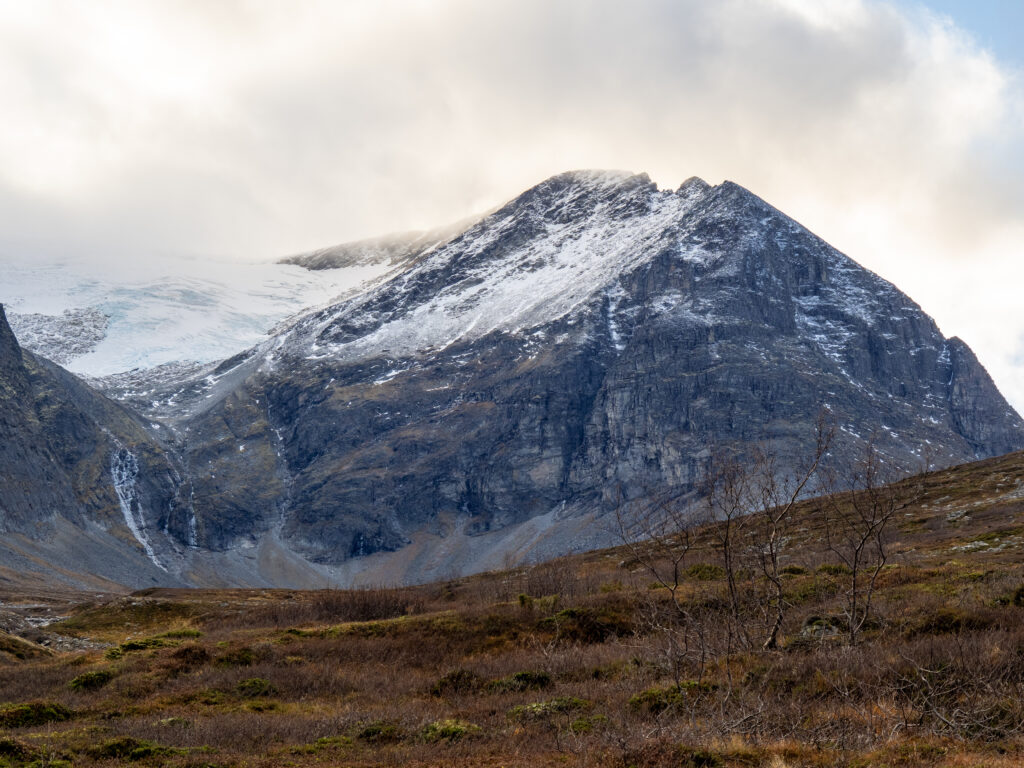
Dordinakken, an alpine gem well hidden by the giants that surround it, has lingered in the back of my mind for years.
I first set out to climb it with Denis Hoste, a long-time friend from Belgium I’ve shared the rope with on countless adventures. During the winter of 2018-19, we climbed a line on Hovenmannen with some minimal overnight gear in our backpacks. The idea was to cross the valley behind Hovenmannen and climb Dordinakken the next day. After summiting, we descended into a metre of powder snow and dense mist. We understood that crossing the 5 km valley was going to be impossibly slow and, as Denis needed to catch a train the next evening, we decided to bail on our second objective.
With that, the desire to discover the secrets “the Dord” keeps was put on ice.
Though its remoteness kept attracting me throughout the years, it wasn’t until late October this year that Dordinakken came into the crosshairs again.
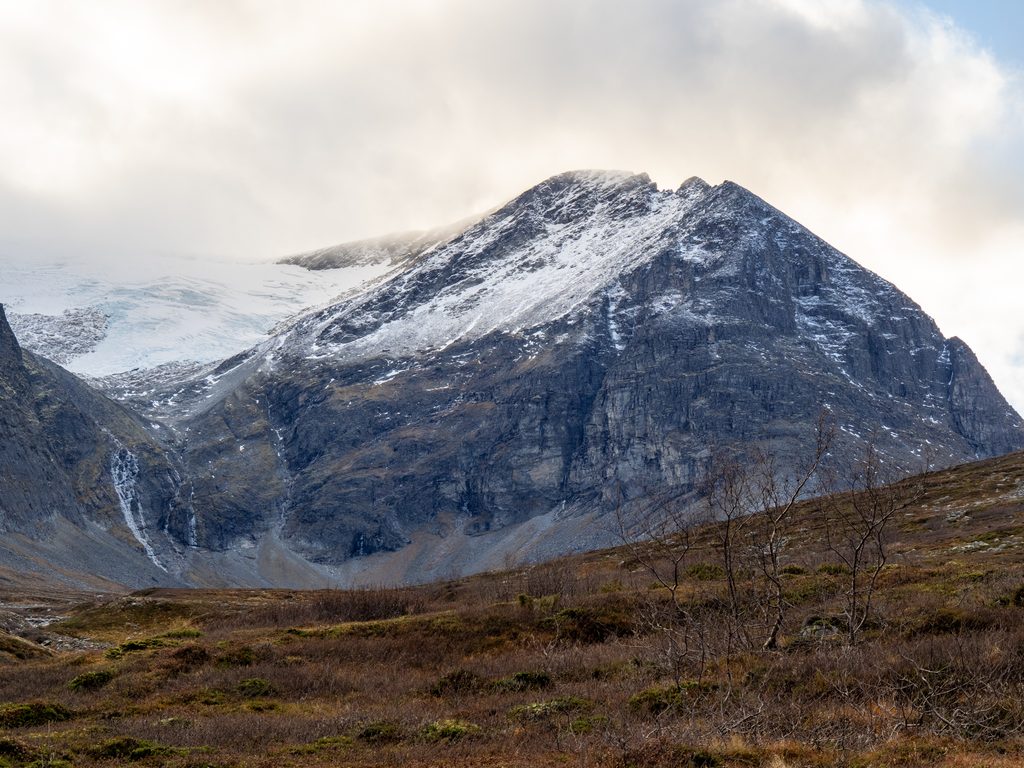
Kjetil Grimsæth and I managed to match a weekend on our calendars, a feat becoming strangely more difficult with age, and as conditions lower down weren’t good yet, we decided to make the long approach and see what we’d find on Dordinakken.
I’ve always found these early-season missions an important part of winter climbing. They set the tone. Stoke the fire, so to speak. They’re often quite involved and become a good base for the rest of the season.
We left quite late and hiked up the steep trail from the dam at Dalasetra in Grødalen. Light rain gradually turned to wet snow as we gained height, and by the time we crawled into our sleeping bags we were thoroughly soaked. We waited for daylight before getting ready, and only then did I see the actual size of the peak. It was far bigger and more complex than I had imagined.
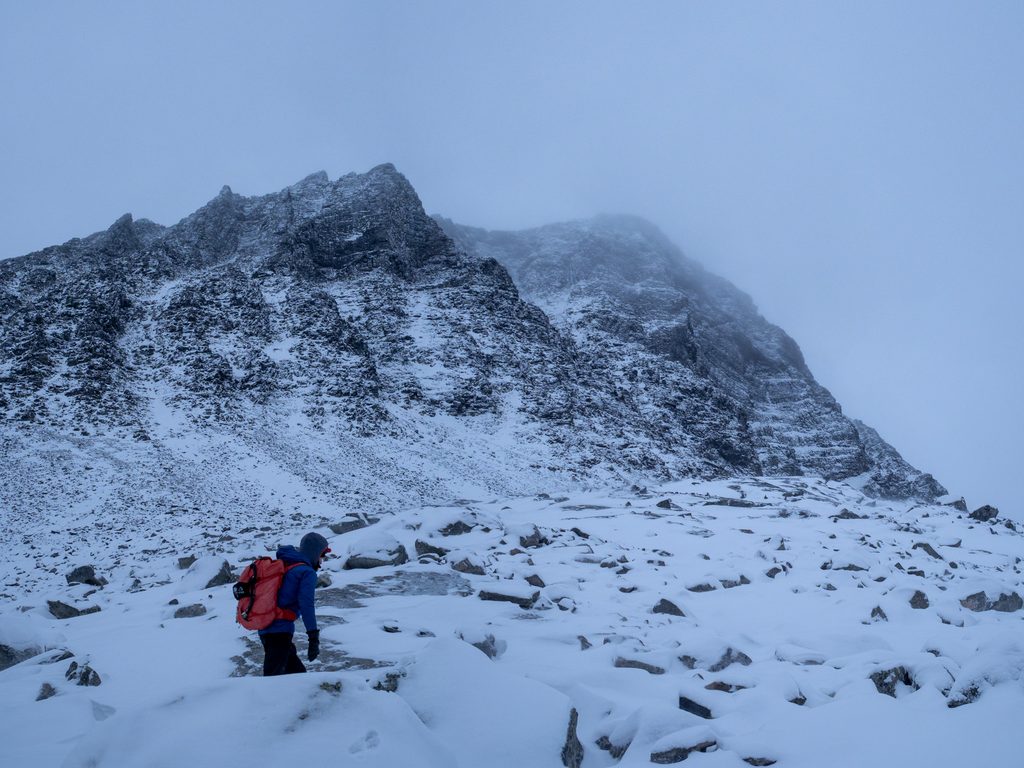
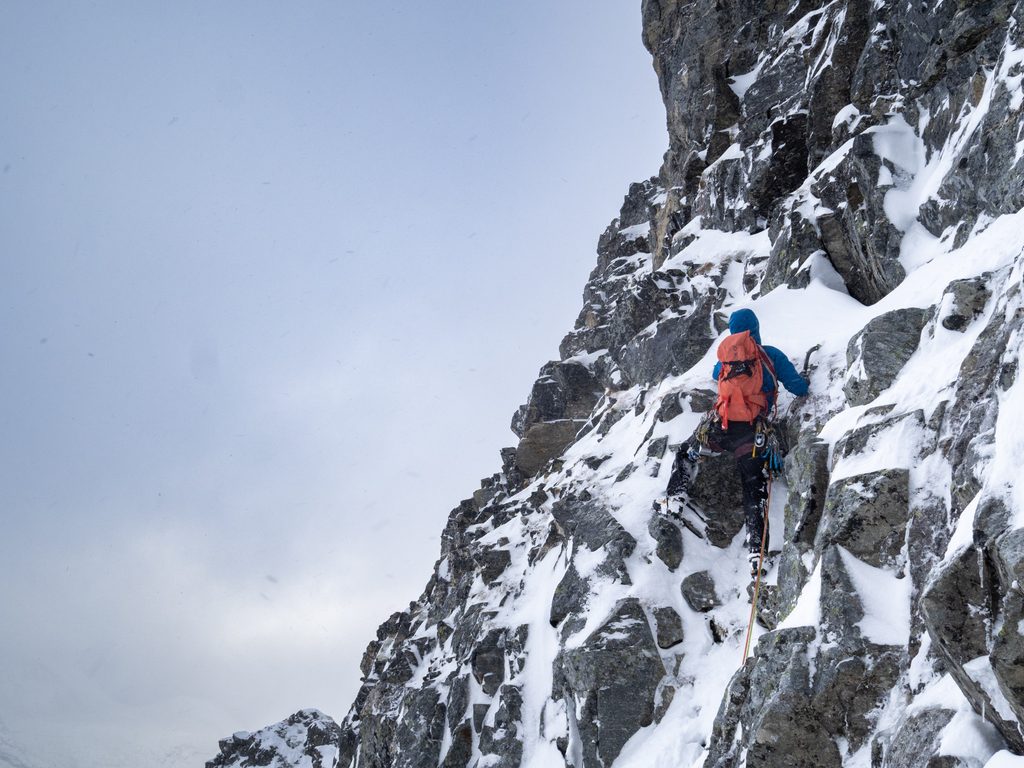
We found ourselves a line and made our way up fun alpine terrain, with snowfields mixed with small rocky walls plastered with snow and ice. After getting two-thirds of the way up, Kjetil climbed a steeper rock face. The climbing quickly became a lot more precarious, with technical moves and marginal protection. The second pitch, my lead, started beneath an overhang above a slab. With a head that’s not fully in the game yet, I pulled the plug there. It was already 2 p.m. and we had a lot of steep rock above us. Working through this committing move was hardly going to be the last of the difficulties.
But as with many of these decisions, regret came creeping in ever so soon after the fact. Armed with pictures from different angles of the wall, we needed to find the next opportunity to get out there. Aligning our stars got a little more difficult this time, though. So, after contacting most of my alpine buddies, I ended up making plans with Alf Furseth, an 17-year-old up-and-coming alpinist and son of a friend of mine.
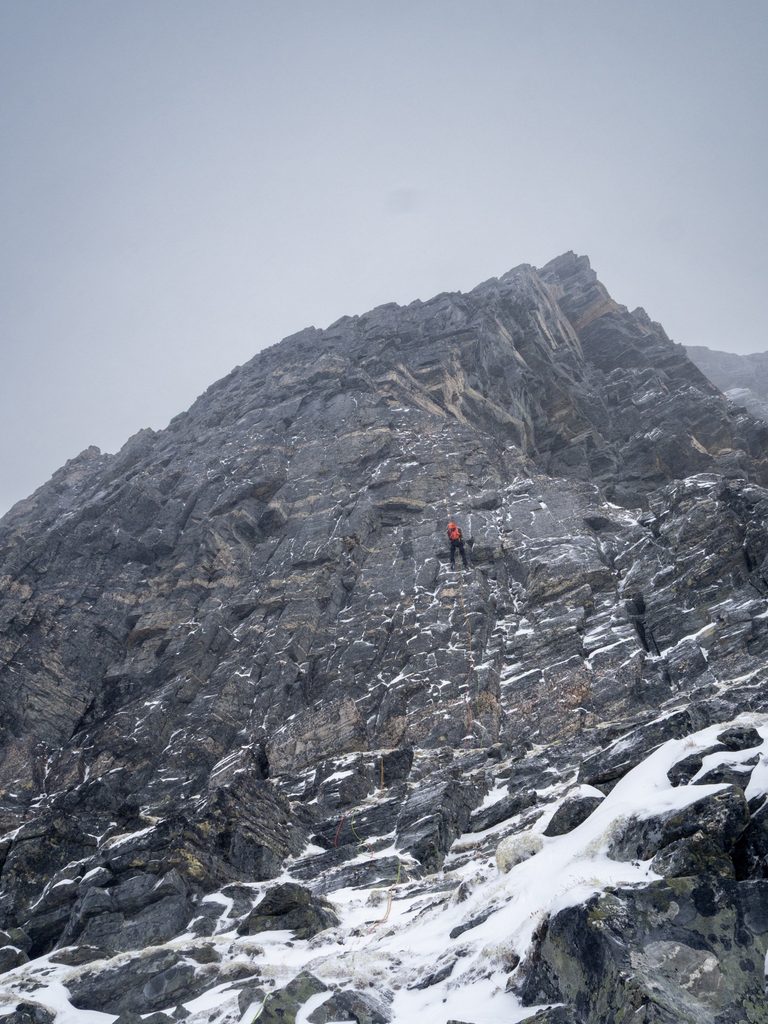
I’ve always liked the mentorship relationships in climbing, but this wasn’t going to be the classic “sensei and grasshopper” style of climbing. Though fairly inexperienced, Alf already knows the name of the game. His stoke levels reach far beyond what I’ve seen in many aspiring climbers. It was going to be his first alpine adventure on a full winter ascent, but with a lot of rock routes on Hornaksla under his belt, I was hardly worried about his physical strength.
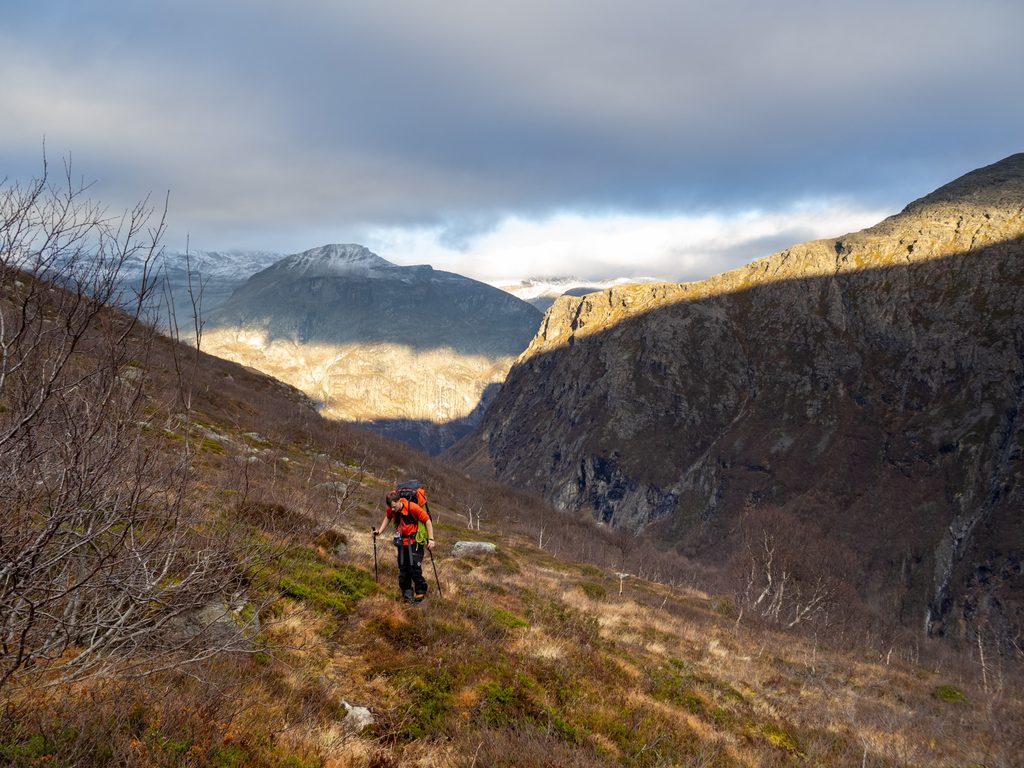
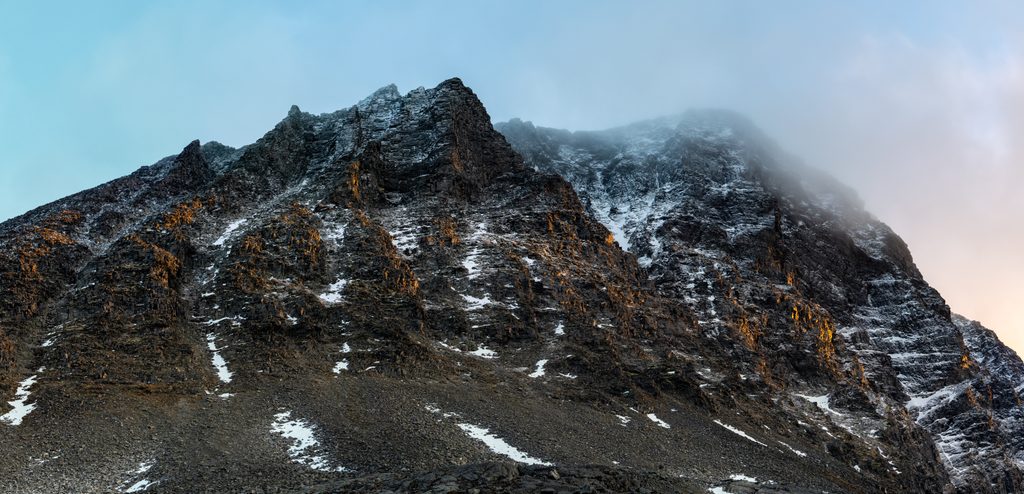
Arriving at the campsite in full daylight on Saturday, we were shocked to see how dry the peak had become. Most of the snow that Kjetil and I had encountered was gone, though we could still see possible lines leading up. We decided to take a couloir into an amphitheatre and see what we were met with there.
After oversleeping a little, we fired up the slope, bypassing sections of thin ice by scrambling over scree. Shortly after, we tied in and simul-climbed long stretches of fun hard-packed snow and intermittent sections of mixed terrain. After realizing we had almost reached a low col on the summit ridge, we decided to traverse out towards an inviting strip of ice.
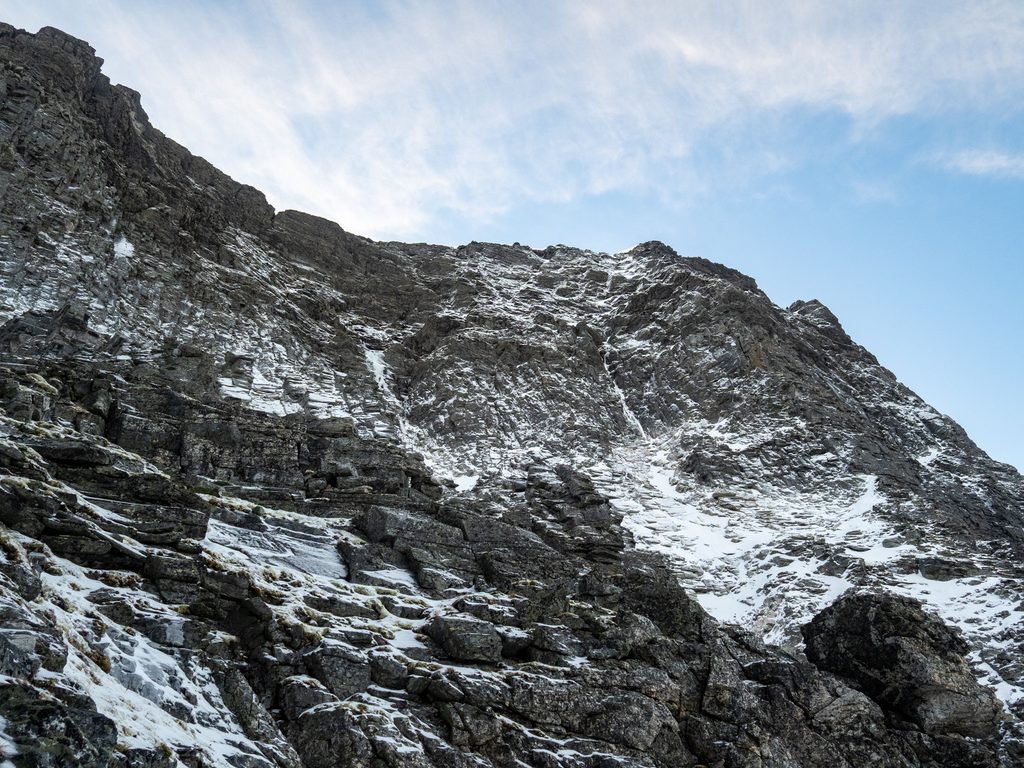
– Photo: N.Neirinck
It was funny how easy it was to traverse steep ridges and couloirs to get underneath the ice. I led a short section of steeper mixed climbing to a belay where Alf took the lead on the ice. Despite only having five short screws, he made short work of the 40-odd metres of water ice. After that, a short overhanging rock gully was waiting for us. I could see my young partner was excited, so I did not object when he asked to lead the next bit too.
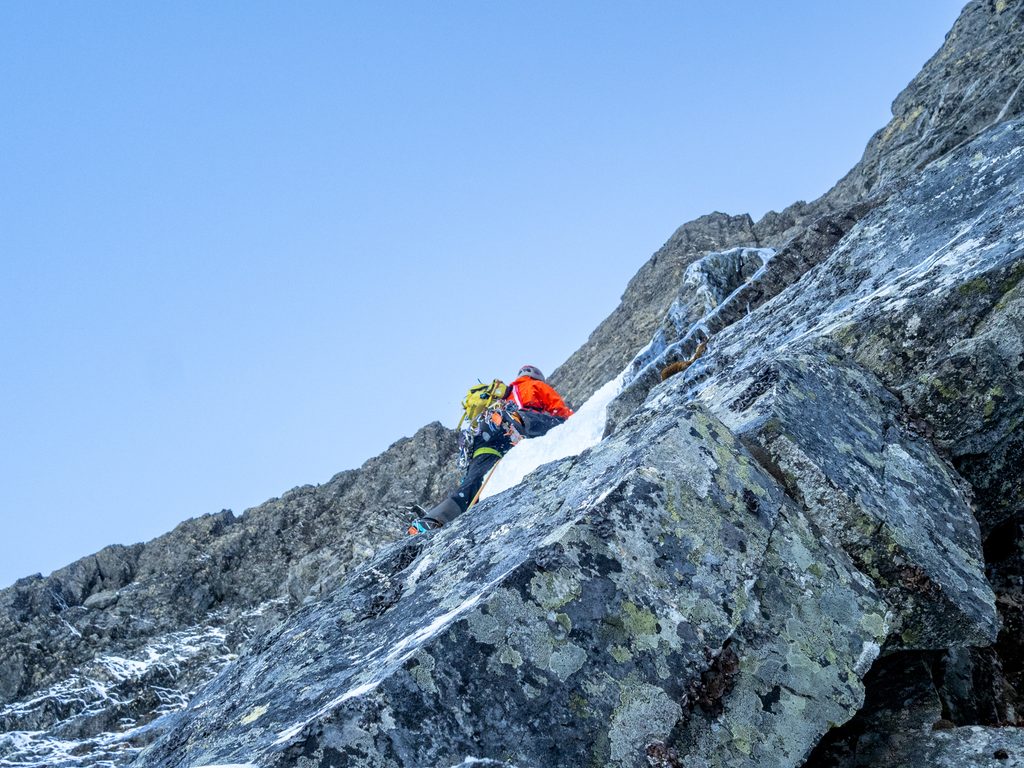
Despite being a committing little section, Alf managed to find bomber holds and solid gear and made his way up in style. I was honestly impressed by how naturally and confidently he was finding his way through the terrain. After his “money pitch”, I finished our ascent with a lower-angle but harder-to-protect pitch over compact rock and moss, after which we could bask in the sunshine on the summit, around six hours after leaving the tent.
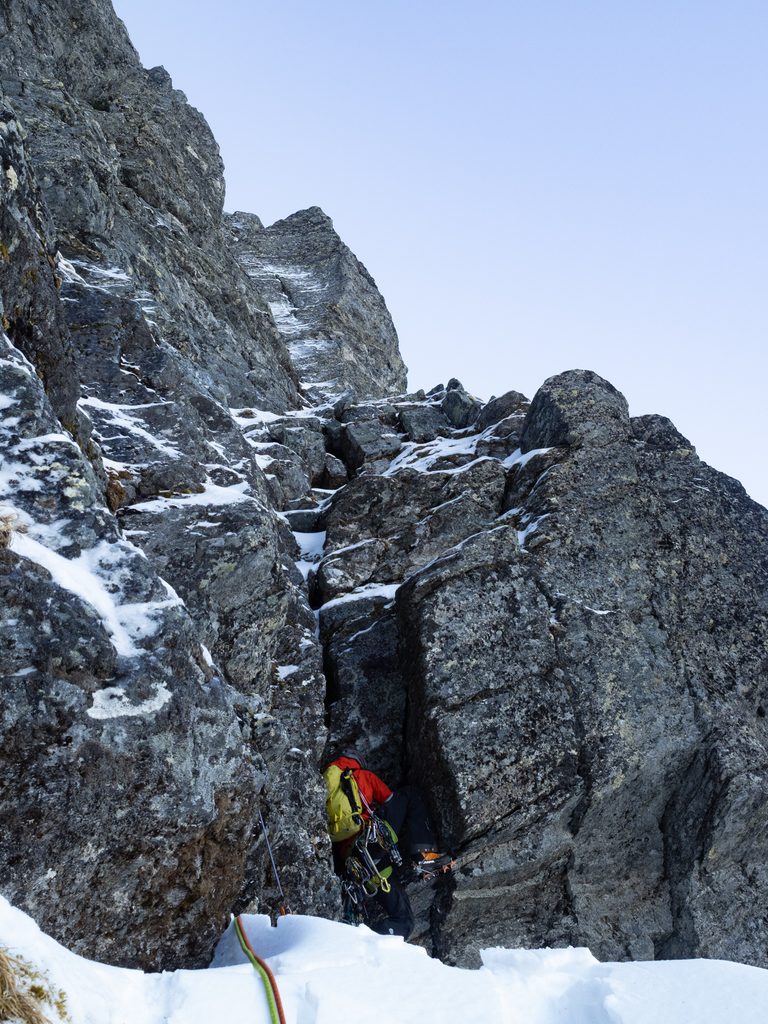
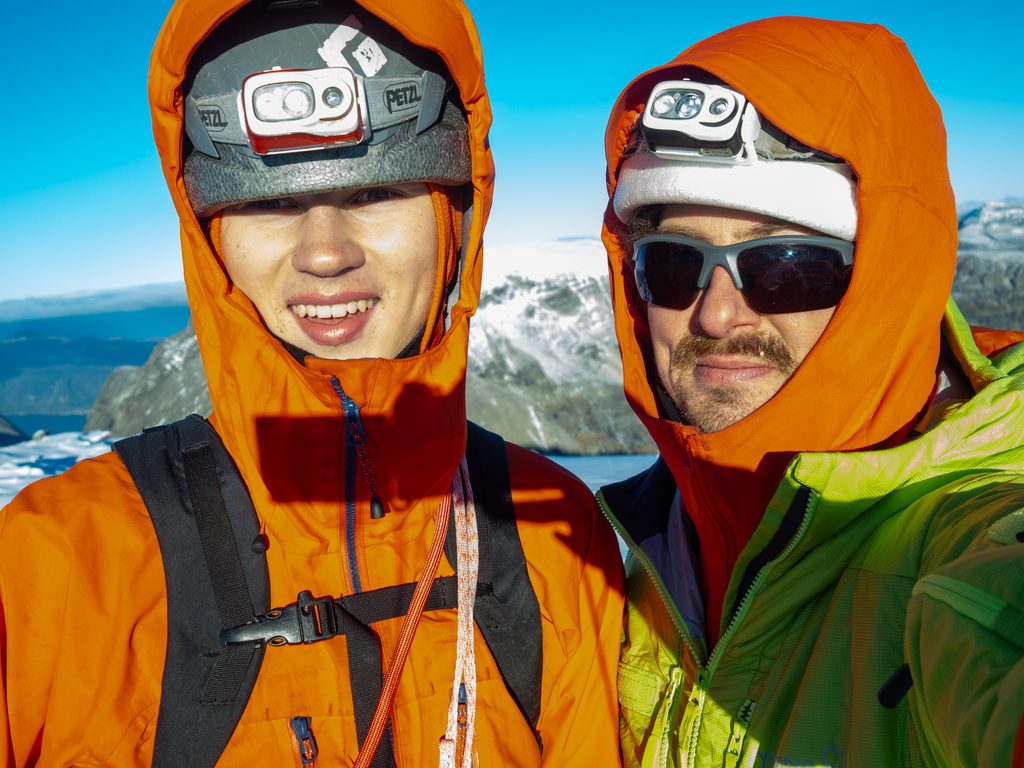
The way down went, against our expectations, quite smoothly despite the boulder fields being covered in a thin layer of rime. The long walk back with heavy backpacks didn’t break our spirits, though I must admit I could noticeably feel our age difference. In contrast to my companion, I wasn’t able to take little jumps and hops while descending the endless gravel road.
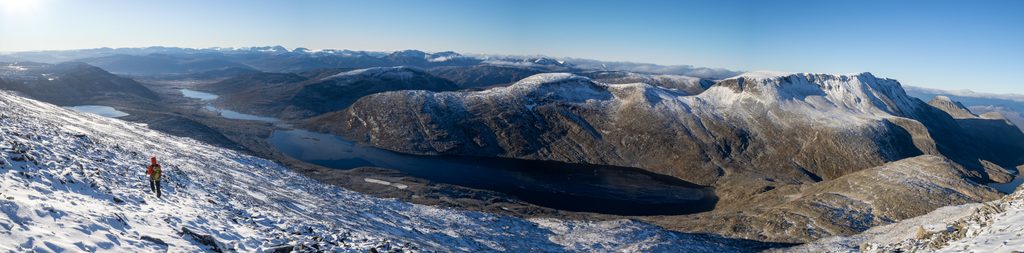
Dordinakken will need a little more snow before it truly opens up its realm of alpine adventure, but when it does, we’ll be ready for another round.
Our line was most likely a new one on the face. 200-250 meter of simulclimbing on snow and ice gullies lead to 4 pitches that take you to the summit: M4 (30m), WI3+ (40m), M4 (30m), M3R (60m, easy climbing but runout).